
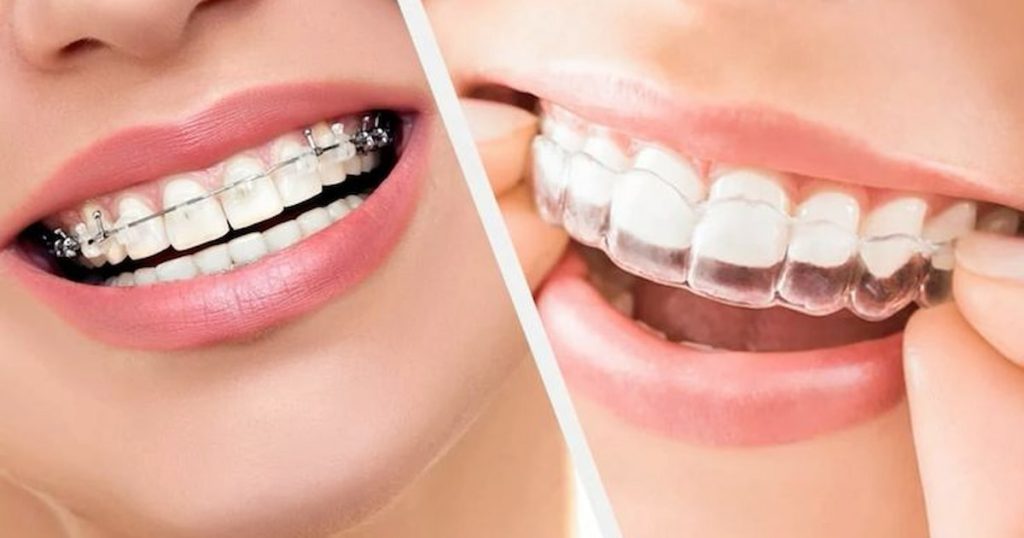
Choosing the right orthodontic treatment is a crucial decision for anyone eager for a healthier, straighter smile. With improvements in dental technology, patients have more options than before. In this blog, we will analyze the details of two popular choices: Invisalign vs. traditional braces and compare their functionalities, costs, treatment durations, aesthetic effects, and overall effectiveness to help you make an informed decision.
A Quick Comparison Between Dental Braces vs Invisalign
The choice between Invisalign and traditional braces is an essential decision in orthodontic care. Invisalign, known for its clear, custom aligners, offers an unnoticeable solution, particularly appealing to adults and teens concerned about the look of braces. Traditional braces, with their metal brackets and wires, are a proven choice for complex dental issues. They’re visible but cost-effective, and their fixed nature means there’s no need for the self-discipline required by Invisalign.
| Feature | Invisalign | Traditional Braces |
| Appearance | Nearly invisible, clear aligners | Noticeable metal or ceramic brackets and wires |
| Comfort | Smooth plastic, less irritation | Can cause discomfort due to wires and brackets |
| Removability | Removable for eating and brushing | Fixed to the teeth, not removable |
| Eating Restrictions | None; remove aligners while eating | Many; avoid hard, sticky, or chewy foods |
| Oral Hygiene | Easier to maintain (remove aligners to brush) | More difficult – requires special tools to clean |
| Treatment Duration | 6 to 18 months (varies by case) | 18 to 24 months (varies by case) |
| Follow-up Visits | Fewer and shorter visits | More frequent visits for adjustments |
| Effectiveness | Best for mild to moderate issues | Suitable for all types of orthodontic cases |
| Cost | Generally more expensive | Usually more affordable |
| Age Suitability | Teens and adults | Children, teens, and adults |
What Are Invisalign and Traditional Braces?
When talking about orthodontics, Invisalign and traditional braces are two key options, each with different advantages. Invisalign is a new way to straighten teeth. It includes wearing a set of clear aligners that you can take out while eating, drinking, and brushing. It’s perfect for those who prefer a less noticeable treatment. That makes it especially popular among adults and teens.
Traditional braces, on the other hand, use metal brackets and wires fixed to the teeth, making them highly effective for complex dental issues. While they are more visible, they are often more budget-friendly and affordable.
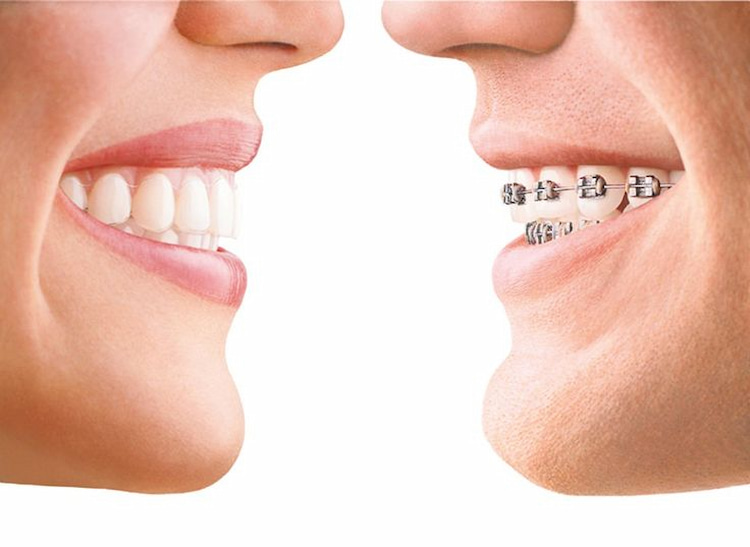
While Invisalign aligners are suited for lifestyle ease and aesthetic will, traditional braces are known for their effectiveness in complex orthodontic cases. Both methods aim to boost oral health and provide a straighter, healthier smile, and the choice between the two largely depends on your personal preferences, lifestyle, and specific dental needs.
How Do They Work to Straighten Teeth?
Apart from structures and materials, these two treatments have different approaches to straightening teeth.
| Invisalign | Traditional braces |
| It uses a series of personalized, clear plastic trays, each designed to gradually shift your teeth to the desired position. You should wear each set of aligners for a few weeks until your teeth are ready for the new set when you will need to replace your aligners. This routine will continue till your teeth are gently and gradually moved toward the desired alignment. | They use a system of wires and brackets that apply continuous pressure to the teeth. This pressure is adjusted regularly during orthodontic visits and slowly guides the teeth into proper alignment. |
Invisalign and traditional braces require regular checks and changes by a professional orthodontist to ensure the treatment progresses efficiently and achieves the best teeth alignment.
Suggested Article: Important Things About Orthodontic Treatments
Invisalign vs Braces: The Main Difference
The key differences between Invisalign and traditional braces lie in their visibility and removability. Invisalign aligners are almost invisible, merge with your natural teeth, and you can take them out easily for eating and cleaning your mouth. They provide an unnoticeable and appropriate treatment option. On the other hand, traditional braces are more noticeable due to their metal brackets and wires and are fixed to the teeth during the treatment, which makes them a longer-lasting solution in one’s mouth.
- Traditional braces: The regular adjustment of this pressure during orthodontic visits is crucial, as it ensures the teeth move correctly and efficiently toward their perfect position.
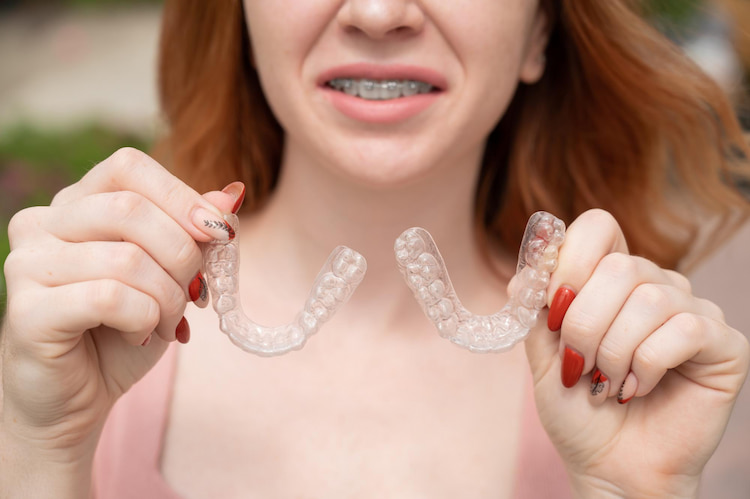
- Invisalign: For the best results, it is recommended that Invisalign aligners be worn for 20 to 22 hours per day, allowing for removal during meals and oral cleanliness routines.
Invisalign vs Braces Cost Comparison
The cost of Invisalign and traditional braces differs, largely depending on the complexity of the dental issues you have and the length of the treatment. Generally, Invisalign tends to be more expensive because of the advanced technology involved in creating clear aligners.
Despite this, many dental insurance plans now provide coverage for both Invisalign and traditional braces, making them more accessible. Moreover, flexible payment options are often available, helping to lessen the financial load and making these orthodontic treatments a possible option for patients.
Receive Top-Notch Orthodontic Treaments!
At Dentistry on Gloucester, we offer both Invisalign and traditional braces to help you achieve a straighter, healthier smile, your way. Book a consultation with our expert team today and let’s find the best treatment for you!
Treatment Time for Invisalign vs. Braces
The length of treatment with Invisalign and traditional braces varies significantly based on individual dental needs. Traditional braces usually require a longer period, around 18-24 months, and this duration can extend more for complex alignment issues. In contrast, Invisalign generally offers a shorter treatment timeline, averaging between 12-18 months.
Some people can even see evident changes in just a few months. No matter which method you choose, it’s important to keep going to the dentist regularly. These appointments allow the orthodontist to monitor the progress and make necessary adjustments to ensure the treatment is effective in achieving the desired results.
Aesthetics and Lifestyle Impact
Invisalign’s invisible nature is important for people who prefer a more invisible orthodontic solution, mostly those who are uncomfortable with the appearance of metal braces. Being able to take out the aligners means you have fewer food restrictions, and it’s easier to keep your mouth clean since you can remove them to eat, brush, and floss.
On the other hand, traditional braces are more visible due to their metal brackets and wires, but they offer a way to personalize your treatment using colored bands. This feature often makes them a more attractive option for younger patients, who enjoy the opportunity to customize the look of their braces.
This helpful article gives you more insight into Invisalign food restrictions: Eating with Invisalign Restrictions: Can You Eat with Clear Aligners?
Effectiveness and Results Comparison
According to an article on PubMed Central, both Invisalign and regular braces work well for fixing different teeth alignment issues. Traditional braces are adept at handling complex orthodontic cases, offering detailed control over tooth movement. In contrast, Invisalign is suitable for correcting minor to moderate alignment issues, though it might not be the best option for extremely complex dental conditions.
The success of both treatments depends on the patient following instructions. This is especially true for Invisalign, where the effectiveness of the treatment is closely tied to the patient’s commitment to wearing the aligners for the recommended minimum of 22 hours per day.
Final Remarks
Choosing between Invisalign and traditional braces is a decision that should be made based on your personal dental needs, lifestyle, and aesthetic desires. Both choices offer good ways to get straighter and healthier teeth.
At Dentistry on Gloucester, our experienced dental team is ready to guide you through this important decision. We provide custom evaluations to find the best treatment plan for your specific dental needs. So why wait?! Schedule a consultation with us today and leave the rest to our professional dental team!
FAQs about Comparing Invisalign and Traditional Braces
What are the main differences between Invisalign and traditional braces?
The main differences between Invisalign and traditional braces are visibility and removability. Invisalign uses clear, removable aligners, making them invisible and allowing for easy removal during eating and cleaning. Traditional braces consist of metal brackets and wires fixed to the teeth, making them more noticeable, and you can’t remove them every time you want.
Is Invisalign cheaper than braces?
No, Invisalign aligners are generally more expensive than traditional braces. The higher cost shows the advanced technology and personalized work that goes into making the clear aligners.
Can Invisalign treat the same orthodontic issues as traditional braces?
Invisalign is effective for mild to moderate orthodontic issues, but may not be suitable for very complex cases. Traditional braces are better for a wider range of orthodontic problems, including complex alignments.
Is Invisalign more comfortable than traditional braces?
Yes, Invisalign is considered more comfortable than traditional braces. The smooth, custom-fit aligners don’t have the brackets and wires that can cause discomfort or irritation in traditional braces.
How does oral hygiene differ between Invisalign and traditional braces?
Oral cleanliness is simpler with Invisalign since the aligners can be removed for easy cleaning of teeth. Traditional braces require more careful cleaning around brackets and wires to maintain oral hygiene.
What are the dietary restrictions with Invisalign compared to traditional braces?
Invisalign has fewer dietary restrictions as aligners are removed while eating. Traditional braces require avoiding certain hard, sticky, or tough foods that can damage the braces.
Can adults benefit from Invisalign as effectively as teenagers?
Yes, Invisalign can be beneficial for adults, as well. It is popular among all age groups because it’s hard to see and doesn’t change your daily life much.
Is Invisalign faster than braces?
Invisalign can be faster than traditional braces for mild to moderate alignment issues, with average treatment times ranging from 6 to 18 months, while braces typically take 18 to 24 months. However, the speed and effectiveness depend on the complexity of the case.
How often do I need to visit an orthodontist during Invisalign treatment compared to traditional braces?
Invisalign treatment typically requires visits to the orthodontist every 4 to 6 weeks, similar to traditional braces, to monitor progress and make adjustments as needed.
Is the effectiveness of Invisalign and traditional braces similar for complex dental issues?
Traditional braces are generally more effective for complex dental issues because they can move teeth more accurately. Invisalign may not be as effective for very complex orthodontic cases.
Is Invisalign better than braces?
It depends on your needs. Invisalign is more discreet and removable, making it convenient for adults and teens who prioritize appearance and flexibility, while traditional braces are often more effective for complex orthodontic problems and are generally more affordable.
Have you tried Invisalign or traditional braces? Share your experience in the comments below. Your insights could help others make the right choice too!